We don't sell packaging. We sell shelf life.
Article · Packaging Explained
A retort pouch is a flexible laminate pouch that withstands thermal sterilization (retorting) — heated to 121–135°C under pressure — so the food inside becomes commercially sterile and shelf-stable at room temperature, with no refrigeration. It is a lighter, faster-heating alternative to metal cans and glass jars that still blocks oxygen, moisture and light. Antilia Tec Pack builds retort pouches on BARRIXA™ barrier structures, in foil or foil-free ULTRA grades, matched to each product — liquid, acidic or dry.
Everything food brands should know about retort packaging — how it works, how it compares to cans, and how to choose the right structure.
Sterilization temperature
Refrigeration needed
ULTRA grade available
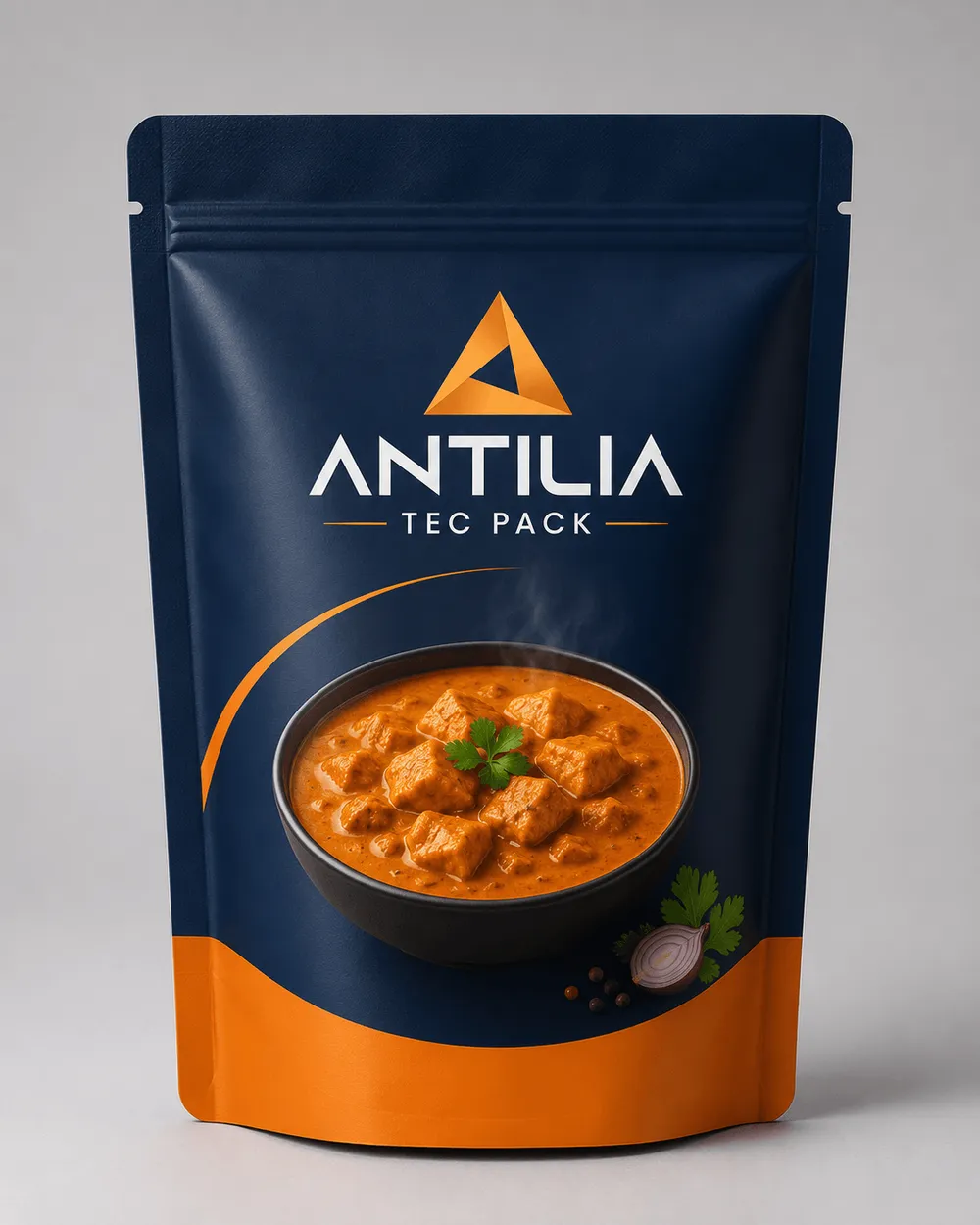
The basics
A retort pouch is a flexible, multi-layer laminate pack engineered to survive retorting — a high-temperature, high-pressure sterilization process carried out inside a retort (autoclave) after the pouch is filled and sealed. The heat destroys spoilage organisms and pathogens, making the packed food commercially sterile.
The result is a ready-to-eat product that is shelf-stable at room temperature — no cold chain, no preservatives required for sterility — yet lighter and quicker to heat than a metal can. Just warm the pouch (or empty it into a pan or microwave-safe dish) and serve.
How it works
Product is filled into the pouch and hermetically sealed, removing headspace air.
Sealed pouches are heated to 121–135°C under pressure inside a retort/autoclave.
The heat achieves commercial sterility, destroying spoilage and pathogenic organisms.
Pouches are cooled and become shelf-stable at ambient temperature — no refrigeration.
Because a pouch is thin and flat, heat penetrates faster than in a can — often meaning shorter process times, and better retention of flavour, colour, texture and nutrients.
Comparison
| Parameter | Retort pouch | Metal can |
|---|---|---|
| Weight | Very light | Heavy |
| Heating speed | Fast (thin profile) | Slower |
| Flavour / texture | Better retained (shorter cook) | Longer thermal exposure |
| Shipping & storage | Compact, flat, less volume | Bulky, rigid |
| Shelf appeal & print | Large printable faces | Label only |
| Consumer convenience | Easy open, microwave/boil options | Needs a can opener |
| Shelf stability | Ambient, long shelf life | Ambient, long shelf life |
Actual shelf life depends on product, recipe, process and storage conditions, and should be validated per product.
Built on BARRIXA™
Retort pouches must hold their barrier and seal integrity through the heat and pressure of sterilization. Antilia Tec Pack builds retort pouches on the BARRIXA™ barrier system, matched to your product and process.
Aluminium-foil laminates for maximum barrier and light protection — the proven choice for long-life ready meals, curries, gravies and seafood.
Near-aluminium barrier using advanced foil-free technology — for brands that want high barrier with a lighter, more flexible, retort-capable structure.
Stand-up, flat, three-side-seal and spouted retort pouches — with easy-tear notches and options tuned to your filling line.
Liquid, acidic or dry, high-oil or high-salt — the laminate is engineered around your recipe, fill temperature and target shelf life.
Where they're used
No. Once retorted, the product is commercially sterile and shelf-stable at room temperature, so it can be stored and shipped without a cold chain.
Retort sterilization typically runs at 121–135°C under pressure. The exact process is set by the product, its acidity and the required commercial sterility.
Foil-based pouches are not microwaveable, but foil-free structures can be designed for microwave reheating. Many pouches are also boil-in-bag friendly. We can match the structure to how your customers will heat the product.
For many ambient ready-meal and wet-food products, yes — pouches offer the same shelf stability while cutting weight, shipping volume and cook time, with far more shelf appeal.